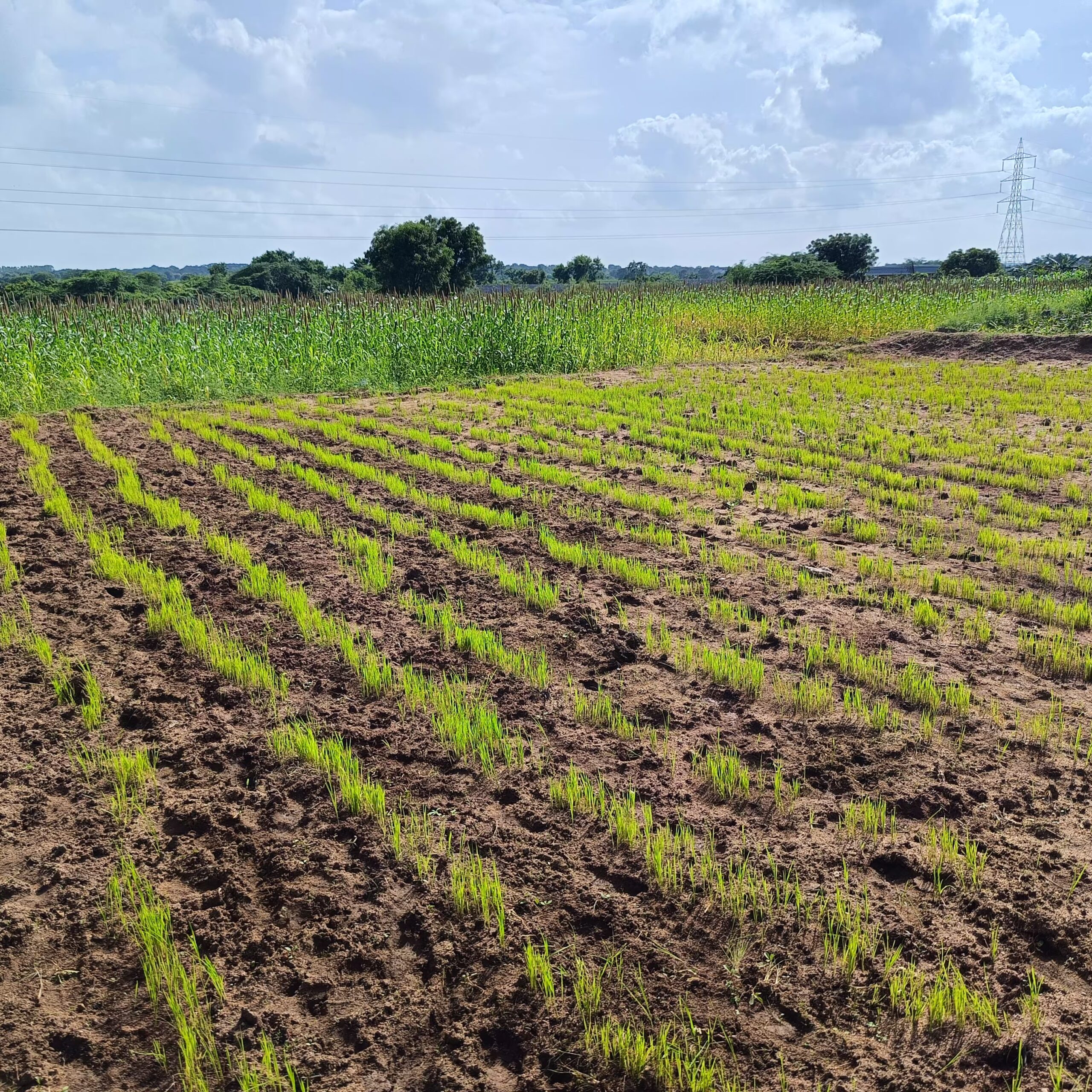
Water Savings
60–70% Reduction
Methane Emissions
Significantly Lower
Root Systems
Deeper & Stronger
Strategies for Water Conservation in DSR
Direct Seeded Rice eliminates the need for flooded nursery beds and puddle transplanting — the two biggest water consumers in conventional paddy systems. RegenCrops implements a layered approach to maximise water efficiency across the entire crop cycle:
- Optimised water availability by capturing and slowly releasing water into soil, reducing reliance on additional irrigation
- Applied protective mulch layers after planting to minimise evaporation and regulate soil temperature for improved germination
- Implemented irrigation scheduling based on real-time soil moisture conditions rather than fixed calendars
- Used controlled drying intervals between irrigations to promote deeper root development and aerobic soil conditions
- Modified field layouts to improve water distribution and soil aeration across the plot
Water-Use Efficiency & Reduced Consumption
The results are measurable and consistent across pilot sites. Water usage is reduced by 60–70% compared to conventional transplanting, while optimum soil moisture levels are maintained throughout the season.
Lower irrigation frequency means reduced pumping costs for farmers — a direct improvement to farm economics that often offsets the additional management attention DSR requires during the germination window.
Enhanced Root Development & Yield Stability
Because DSR rice develops in unsaturated soil from day one, roots are forced to grow deeper in search of moisture. This produces structurally stronger root systems that are more resilient to dry spells and wind lodging — two of the most common causes of yield loss in paddy crops.
Yield potential is maintained relative to transplanted rice, while input costs fall substantially. Trials under the RegenCrops protocol have consistently demonstrated stable productivity without yield penalties.
Soil & Environmental Benefits
Flooded paddy fields are one of agriculture's largest sources of methane — a greenhouse gas 28 times more potent than CO₂ over a 100-year horizon. By eliminating prolonged flooding, DSR substantially lowers methane emissions, creating a measurable climate benefit per hectare.
Improved soil aeration also accelerates organic matter decomposition and nutrient cycling, supporting long-term soil structure and microbial health — consistent with RegenCrops' broader regenerative objectives.
Key Takeaways
- Water savings of 60–70% without compromising productivity
- Stronger root systems and improved nutrient uptake
- Lower methane emissions for climate-smart rice farming
- Reduced pumping and input costs for better farm economics