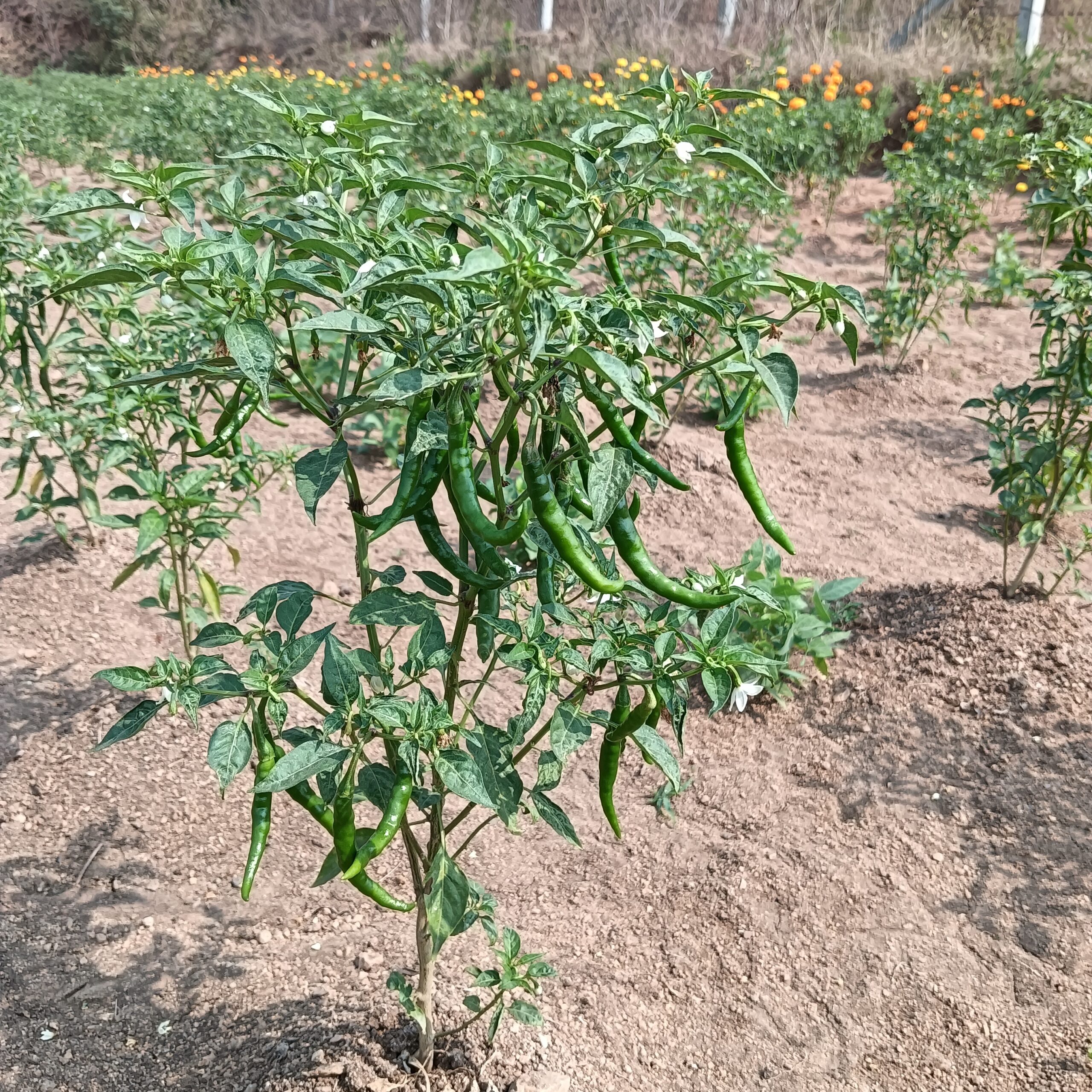
Soil Health
+40% Organic Matter
Water Usage
35% Reduction
Yield
Sustained Productivity
The Challenge: Breaking the Chemical Cycle
Hot pepper cultivation in India has historically relied heavily on synthetic fertilizers and pesticides, leading to degraded soil health, groundwater contamination, and increasing input costs that erode farmer margins. Breaking this dependency requires not just new knowledge — but continuous, real-time support that traditional extension services cannot provide.
The RegenCrops Approach
Our model farm trials at pilot sites in Hyderabad applied a complete regenerative protocol, guided by the RegenCrops AI platform:
- Soil health baselining using sensor arrays and laboratory analysis
- Transition to compost and vermicompost-based nutrient management
- Cover cropping between rows with leguminous species to fix atmospheric nitrogen
- Integrated pest management replacing synthetic pesticides
- Minimal tillage protocols to preserve soil structure and mycorrhizal networks
- Drip irrigation scheduling optimized by AI weather and crop water demand models
Verified Results
After a full growing season under the RegenCrops protocol, independent soil testing confirmed a 40% increase in soil organic matter, 35% reduction in water consumption, and full maintenance of marketable yield — while achieving zero detectable synthetic pesticide residues.
Farmers participating in the trial are now eligible for RegenCrops certification, unlocking access to premium markets and carbon credit earnings that represent a 20–25% increase in total farm income.
The Path Forward
These results demonstrate that regenerative agriculture is not just an environmental aspiration — it's an economically superior farming system when supported by the right technology. RegenCrops is now expanding its model farm trial programme to tomato, turmeric, rice, and cotton crops across multiple states.